


Tampa Bay boasts inviting waters and an array of aquatic life, making it a prime spot for fishing aficionados. One of the most exciting pursuits here is Tampa snook fishing. .
In this comprehensive guide, we will delve into the four different species of snook found in Florida’s waters, emphasizing the common snook – one of the most coveted catches among local fishermen. We’ll also share essential information about when and where to find these elusive fish in Tampa Bay.
But catching a big female snook or any other larger member of this species isn’t just about being at the right place at the right time; it requires specialized gear and techniques. From using artificial baits to mastering effective angling strategies, our guide covers all you need to know for successful Tampa snook fishing.
We’ll also address crucial regulations surrounding this popular pastime – from getting your license requirements right to promoting sustainable angling practices.
Tampa Snook Fishing: An Angler’s Paradise
Florida is a haven for outdoor enthusiasts, and Tampa snook fishing is the ultimate thrill. The Tampa Bay area offers prime spots to catch snook, making it a paradise for anglers.
Catching snook is like a game of hide and seek – they’re elusive and cunning. This is what makes snook fishing so thrilling. Reeling in a big snook is a challenge that will get your heart racing.
You need to know where snooks hang out to increase your chances of success. Look for them in shallow water hideouts like Pier 60 along the coast in Clearwater or ambush points at the North End of Tampa Bay.
And if you want to entice a strike on lures, use artificial baits that mimic the real deal. They won’t be able to resist.
The Four Fascinating Species of Snook in Florida Waters
Florida waters are teeming with various snook species, each offering its unique angling experience. You’ll encounter four primary types while Tampa snook fishing: common snook, fat snook, swordspine snook, and tarpon snook.
Understanding the Common Snook
The common snook, also known as sergeant fish due to its distinctive black lateral line resembling a military stripe, is the largest and most frequently caught species among anglers targeting Tampa Bay’s abundant fisheries. This opportunistic feeder can grow up to 48 inches long and weigh over 45 pounds.
Famous for being an excellent game fish because of their aggressive fight when hooked, these larger specimens are often referred to as “slob”, “bucket mouth snook” or a “big pier 60” by local fishermen. They thrive in both saltwater and freshwater environments, making them highly adaptable creatures.
Apart from its sizeable weight range that makes it an exciting catch for any angler seeking a good challenge on Tampa Bay’s shallow water hangouts or deeper channels; this species has other interesting characteristics too. For instance: they love warm tropical waters (70-80 degrees Fahrenheit), have a diverse diet consisting mainly of smaller fishes like threadfin herring but occasionally indulging in crustaceans & mollusks too.
In addition to all these fascinating traits of common snook – did you know they’re also nocturnal hunters? Yes indeed. These big fish use nightfall as their prime hunting time, which means if you want your chance at catching one, then make sure your gear is ready come dusk.
To learn more about worldwide distribution patterns across different regions where various types of snook inhabit including Gulf Coast areas beyond just Florida – check out this comprehensive guide provided by The Florida Museum.
Florida waters offer a diverse range of snook species for anglers, including the common snook, fat snook, swordspine snook, and tarpon snook. The common snook is the largest and most commonly caught species in Tampa Bay, known for its aggressive fight. These nocturnal hunters thrive in warm tropical waters and have a diverse diet consisting mainly of smaller fishes like threadfin herring.
Best Times and Locations for Catching Snook in Tampa Bay
If you want to catch snook in Tampa Bay, timing is key. These snook fish are most active during strong tidal movements. That’s when all the tasty bait gets flushed in or out of the bay, and the snook can’t resist.
When it comes to finding snook, you need to understand their behavior and where they like to hang out. When the water gets warm in the summer, larger snook head towards deep cuts at the ends of inter-coastal islands or swash channels along the beaches. They love shallow water hangouts with plenty of cover to hide and ambush their prey. Mangrove root systems are some of the best locations to find snook.
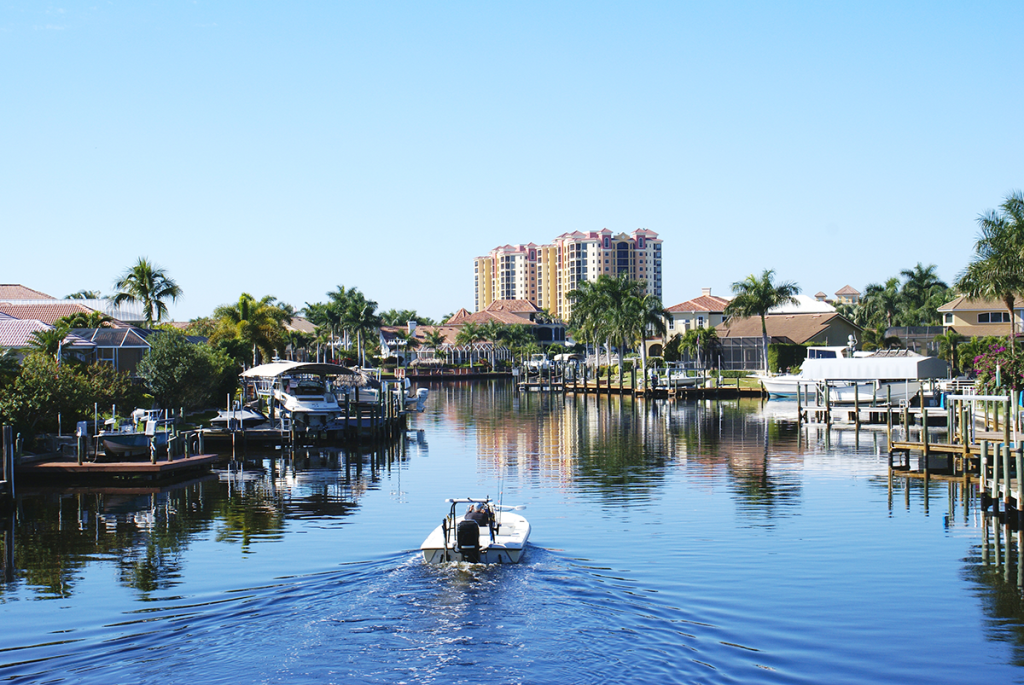
If you’re looking for big female snooks, head to the north end of Tampa Bay, near Pier 60. The deeper waters and abundance of threadfin herring and other baitfish make it a snook paradise.
Tampa Bay Hotspots: The Best Places To Find Snooks
- Fort De Soto Park: An expansive park with numerous fishing spots. The piers here provide good opportunities for catching snook, especially at high tide.
- Skyway Fishing Pier State Park: The remnants of the old Sunshine Skyway Bridge provide excellent deep-water fishing opportunities. Snook often frequent the pilings.
- Tampa Bay Flats: There are numerous shallow flats around the bay where snook feed, especially during warmer months. Popular areas include those near Weedon Island and Fort De Soto.
- Egmont Key: Accessible only by boat, this island at the mouth of Tampa Bay has several good spots for snook. The beaches and grass flats are the most promising.
- Upper Tampa Bay Park: The estuary in this park is a well-known snook habitat. Use a kayak or canoe to navigate the shallow waters.
- Anclote Key: Another boat-only destination, the waters around this island hold large numbers of snook. The mangroves and grass flats are especially productive.
- Bishop Harbor: Located near the Manatee River, this area has a mixture of mangroves, grass flats, and deep channels that attract snook.
- Weedon Island Preserve: Known for its diverse fish population, the flats, and mangroves here are a good place to target snook.
- Cockroach Bay: Despite its name, this is a beautiful area with plenty of opportunities to catch snook. The mangroves and oyster bars are especially productive.
- Caladesi Island: Accessible by ferry or private boat, this untouched island is home to some big snook. The grass flats and sandy beaches are particularly promising.
- Weedon Island Preserve: A great spot for targeting bigger snook, thanks to its extensive mangrove systems.
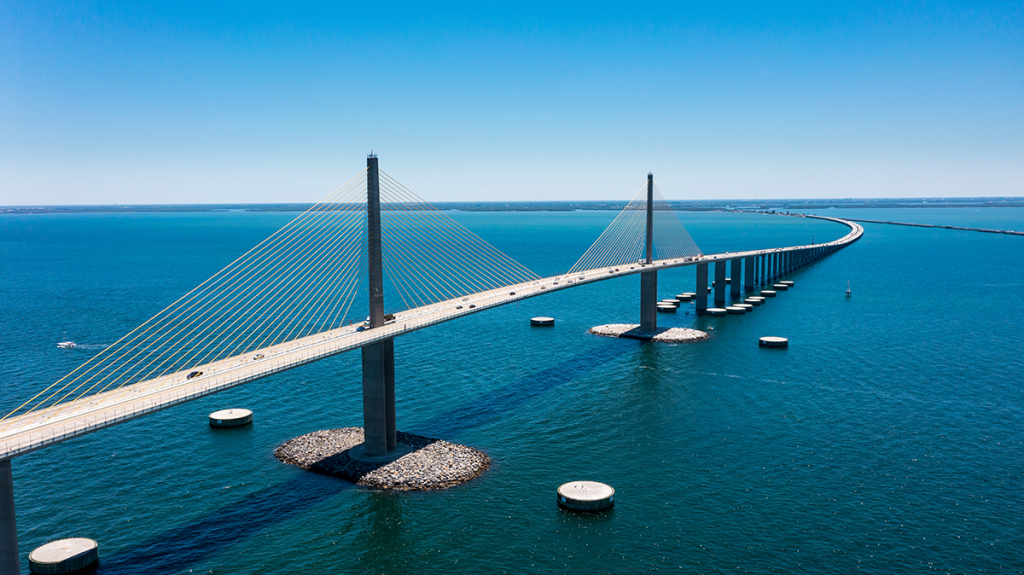
To increase your chances of catching snook in these areas, try using artificial baits that mimic their natural prey, like shrimp or small fish. And remember, it’s not just about catching fish; it’s about enjoying Florida’s stunning outdoors.
Best Times to Fish Tampa Bay for Snook
Introduction to Snook Seasons
The snook’s biological and behavioral characteristics significantly influence its accessibility for fishing throughout the year, with varying patterns observed across different seasons. Snook tend to follow a cyclical pattern of movement and activity, primarily driven by changes in water temperature, daylight hours, and availability of prey. Understanding these patterns can greatly enhance your fishing success in Tampa Bay.
The Best Time To Catch Snook In Tampa Bay
Snook fishing in Tampa Bay, Florida, is typically most productive during the late spring to early fall, with the absolute best time being between May and September.
Here’s why:
- Temperature: Snook are a warm-water species and become more active as the water temperature rises. They tend to feed more aggressively when the water temperature is between 70°F and 78°F. In Tampa Bay, the water temperatures reach this range around late spring and stay there until early fall.
- Breeding Season: Snook breeding season is in the summer, which usually triggers more feeding activity as they prepare for spawning. This usually begins in May and runs until September.
- Fish Movements: During the warmer months, snook move from their winter haunts in the backcountry creeks, rivers, and residential canals out to the beaches, passes, and inlets for spawning. This means they are often more accessible to anglers fishing from shore or small boats.
- Bait Availability: Warmer months typically see an increase in the baitfish population (such as pilchards and threadfin herring), which in turn attracts snook looking for a meal.
Seasonal Overview
Like many species, snook fishing in Tampa Bay is seasonal. It’s crucial to understand how each season—spring, summer, fall, and winter—affects the snook’s behavior, as this will determine your fishing strategies.
Spring
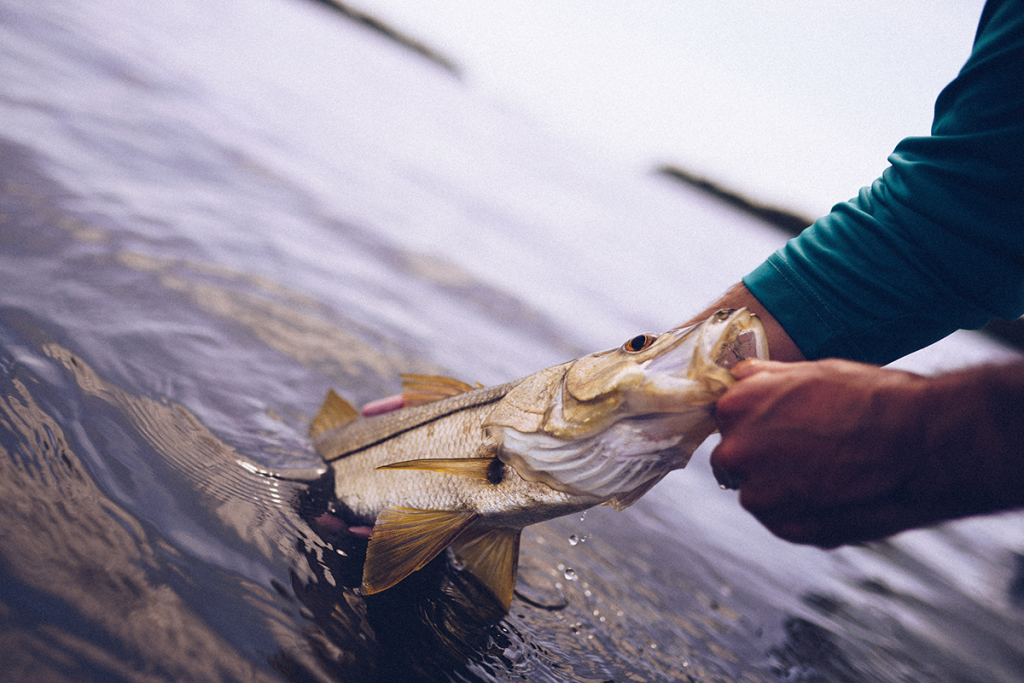
Spring, typically starting in March and ending in May, marks an excellent season for snook fishing in Tampa Bay. As the water begins to warm and daylight increases, snook tend to become more active and move towards the shallow waters in search of food, making them more accessible to anglers. The prime spring months for snook fishing in Tampa Bay are April and May, as the snook begin their migration from their winter haunts.
Summer
From June to August, summer is the peak of snook fishing in Tampa Bay. The warmer water temperatures and longer days prompt a feeding frenzy, particularly during dawn and dusk. Also, during these months, snook spawn, gathering in large numbers in passes and inlets. The abundance of bait and high snook activity make June and July the best summer months for snook fishing in Tampa Bay.
Fall
Snook fishing conditions change as we transition into fall from September to November. Snook begin preparing for the colder months ahead by feeding heavily, making this an opportune time for fishing. However, this period is often marked by fluctuating water temperatures, which can affect their behavior and locations.
Winter
Winter fishing, from December to February, can be quite challenging due to colder water temperatures, causing snook to become less active and retreat to deeper, warmer waters. However, this does not mean snook fishing is impossible during this period. Snook can often be found in sunny, shallow waters on warmer winter days.
Monthly Breakdown
January
Fishing can be challenging this month as snook are often found in deeper waters seeking warmth. Look for them near warm water outflows from power plants.
February
Similar to January, but as the days start getting longer, you may start finding snook in sun-warmed shallows during the day.
March
The warmer weather starts to stir snook into action. Look for them in backwater areas and around mangroves.
April
Snook start becoming more active and move towards the passes and beachfronts. Live bait works well this month.
May
The pre-spawn feeding frenzy starts in May. Sight-fishing along the beaches can be productive.
June
Peak spawning season makes this an excellent month to fish for snook, especially around passes and inlets.
July
The spawn continues. Fishing around the new and full moons can yield excellent results.
August
Still a good month for snook, but they begin to prepare for the fall. Nearshore reefs can be productive.
September
Snook are in their fall transition. They move from the beaches back towards the estuaries and can be found feeding aggressively.
October
Cooler water triggers a feeding spree in preparation for winter. Look for snook around structures and mangrove lines.
November
With cooler temperatures, snook start retreating towards deeper waters. Rivers and canals are good spots this month.
December
Challenging month due to cool temperatures. However, snook can be found in sunny, shallow waters on warmer winter days.
Factors Affecting Snook Fishing Times
Tidal Movements
Snook are heavily influenced by tides, with optimal fishing times during high tide and the two hours immediately before and after it.
Moon Phases
Snook activity is often higher during new and full moons, especially during summer months when these phases align with the snook’s spawning period.

Water Temperature
Snook are tropical fish, and water temperature is a critical factor affecting their activity. Ideal temperatures range from 70 to 85 degrees Fahrenheit.
Weather Conditions
Weather plays a crucial role in snook fishing. Overcast skies can lead to more prolonged feeding periods, while high winds can stir up the water and make snook harder to locate.
Understanding these factors and how they affect snook behavior will help any angler make the most of their Tampa Bay snook fishing experience. Remember, while these guidelines can increase your chances of success, nature is unpredictable. Some days the snook just might surprise you.
Gear for Snook Fishing
If you plan on embarking on a Tampa snook fishing adventure, ensure you have the right gear. Trust me, it’s the difference between catching a big snook and going home empty-handed.
Light tackle is the way to go when targeting snook. A 7′ to 7’6″ medium action spinning rod with 10-15 lb test line is perfect. It’s got enough power to handle those big snook, but still gives you an exciting fight with the smaller ones.

If you’re in the market for a setup that can handle most of your inshore fishing needs inside of Tampa Bay’s waters with a budget-friendly price point and the backbone for backcountry snook, The 4000 series Penn Battle combo is a great choice.
Don’t forget your fluorocarbon leader. It’s practically invisible in clear waters, so those sneaky snooks won’t see it coming. And circle hooks are your best friend when it comes to live baits like threadfin herring or shrimp. They hook the fish in the corner of their mouth, enabling them to be set free unharmed. We love sustainable angling.
Using Artificial Baits for Catching Snooks
Artificial lures can be just as efficient in catching snooks as live bait, provided you know how to utilize them correctly. Jigs with soft plastic tails are like a snook’s favorite snack. They’re perfect for those snook hanging out near structure, waiting for their next meal to come their way.
But wait, there’s more. Minnow imitating plugs are a great choice, too, especially when baitfish are scarce. Those hungry snooks will still be lurking in shallow water hangouts near mangroves or docks along the Gulf Coast.
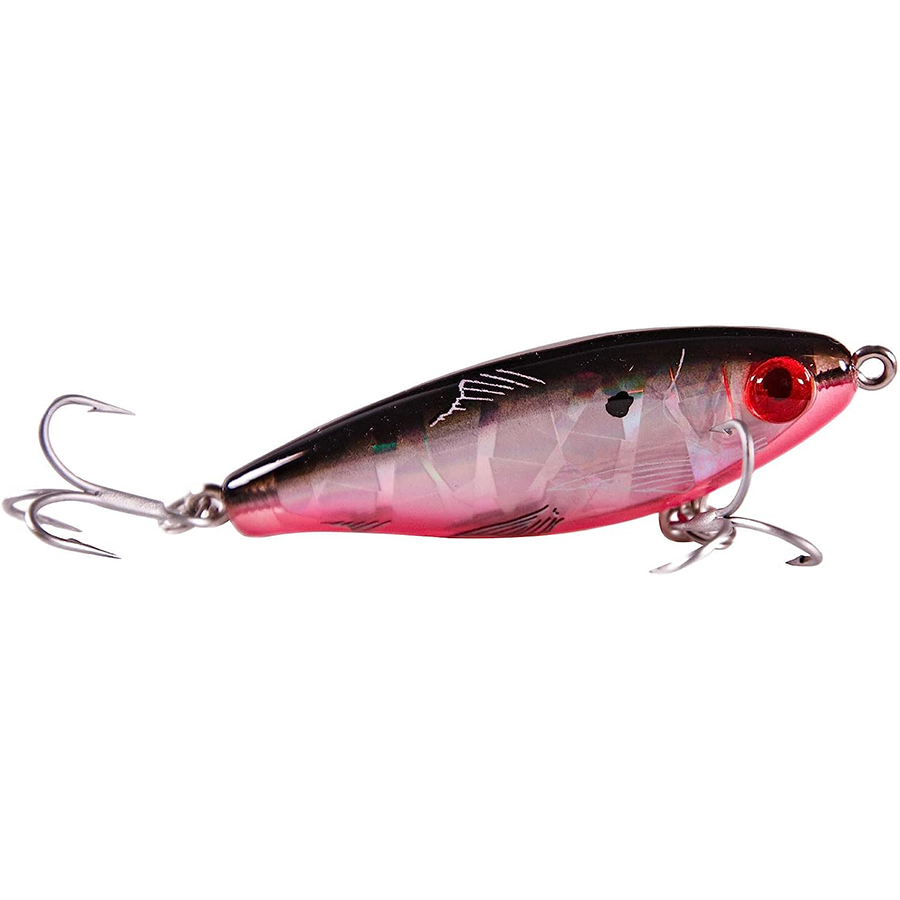
In my years of fishing Florida’s coastal waterways, flats, and backcountry – The Mirrodine MR series has never let me down. No matter the season, these put you on fish.
When it comes to the MR Series, you can play with the sizes, but never forget “even elephants eat peanuts.”
Remember, presentation is key. Make your lure behave like natural prey, and those big female snooks won’t be able to resist.
Twitch, Twitch, BANG!
The Top 5 Lures For Snook
- Rapala X-Rap: This is a versatile plug that can be cast or trolled. It has a life-like action that mimics a wounded baitfish, which can be irresistible to snook. The X-Rap is available in various sizes, but the 4-inch and 5-inch models are especially useful for snook.
- MirrOlure MirrOdine: This suspending twitch bait is perfect for fooling snook in clear, shallow water. Its realistic baitfish profile makes it excellent for mimicking pilchards or other small forage fish. The lure suspends at 2-3 foot depths, ideal for flats and mangroves.
- Yo-Zuri Crystal 3D Minnow: A great choice for clear water, this lure has a patented 3D prism finish and lifelike color patterns that attract snook. It can be trolled or cast and has a tight wiggling action that imitates a swimming baitfish.
- DOA BaitBuster: This soft plastic lure is designed to mimic a mullet, a favorite meal of many snook. The BaitBuster comes in shallow and deep runner versions, allowing you to target snook at different depths.
- Heddon Super Spook Jr: This topwater lure is excellent for early morning or late evening when snook are often feeding at the surface. Its “walk-the-dog” action can provoke exciting topwater strikes from big snook.
Remember, lure choice should be based not just on the species of fish you’re targeting, but also on the conditions you’re fishing in, including water depth, clarity, current, and the type of structure present. It’s also essential to match your lure size and color to the local baitfish or prey as closely as possible.
Mastering Techniques for Catching Big Female Snooks
If you want to reel in those big female snooks, here are some techniques to increase your chances. These snook species are quite the catch and will give you a good snook bite.

Timing is Everything
Snooks are like the divas of the sea, they have specific feeding periods. Catch them during their prime time, early morning or late evening, when they’re hungry and ready to pounce on bait coming in or out with the tide.
Hotspots for Big Snooks
Looking for those big snooks? Head to the north end of Tampa Bay where you’ll find their favorite hangouts – shallow water areas near bridges, docks, and mangrove edges. It’s like their version of a luxury resort.
Baiting the Big Ones
When it comes to bait, live options like threadfin herring or pinfish are popular choices. But don’t underestimate the power of artificial baits. Use lures that mimic injured baitfish to trigger those aggressive strikes from hungry snooks.
Gear Up for the Battle
Ready to take on those big fish? Be sure you have the correct equipment to be prepared for battle.
What To Look For In A Setup
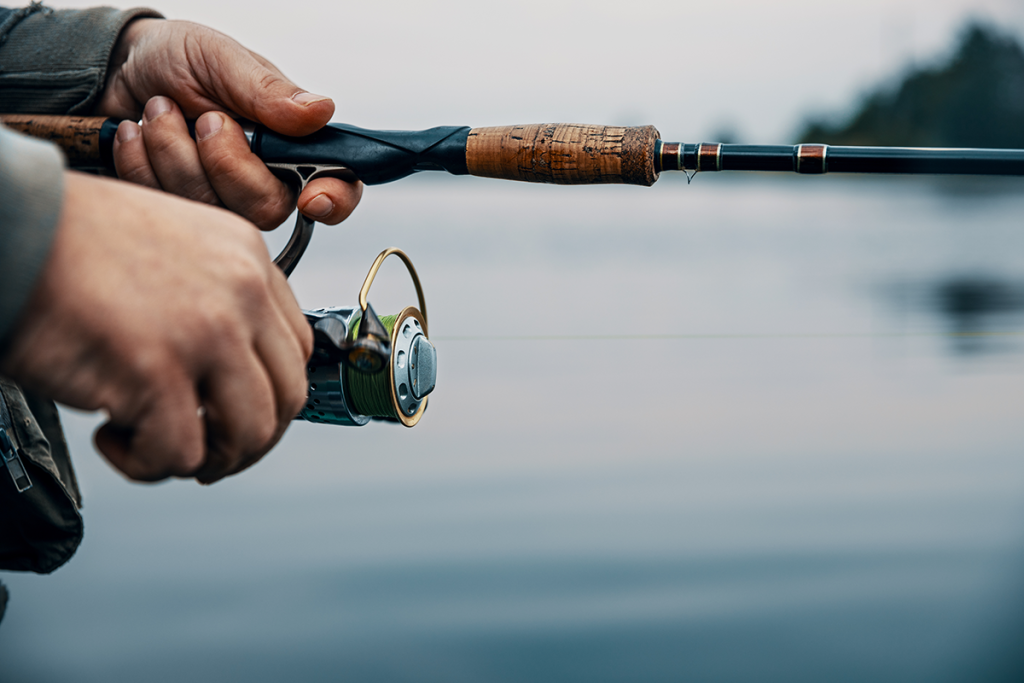
Rod: A medium to medium-heavy power, fast action spinning rod around 7 to 8 feet in length is a good general-purpose choice for snook fishing. This will give you the casting distance needed to reach snook in a variety of locations, while also providing enough backbone to handle a large snook. The fast action tip allows for accurate casting and better lure control.
Reel: A 4000 or 5000 size spinning reel is generally suitable for snook fishing. These reels have a good line capacity for heavier lines and provide a decent amount of drag. Look for a reel with a smooth drag system since snook often make powerful, fast runs.
Line: Braided line in the 20 to 30 lb test range is a good choice. Braid has a thin diameter which helps with casting distance and sensitivity, and the higher strength is needed for snook that can easily reach over 20 lbs. Look for a high-quality braid with good abrasion resistance.
Leader: Snook are known for their line-shredding gill plates and sharp fins, so a heavy fluorocarbon leader is necessary. A 30 to 50 lb test fluorocarbon leader of about 2-3 feet in length will provide good abrasion resistance without being too noticeable to the snook. The leader can be connected to the main line with a line-to-line knot like the Double Uni knot or the FG knot.
Hooks: Use a strong, sharp hook that matches the size of your lure. For live bait, circle hooks in the 1/0 to 4/0 size range are a good choice as they help ensure the fish is hooked in the corner of the mouth, which is important for catch and release.
As with any fishing setup, it’s important to adjust based on the specific conditions you’re fishing in. The size and strength of the snook you’re targeting, the type of bait or lure you’re using, the structure you’re fishing around, and the current conditions can all affect the ideal rod, reel, line, and leader setup.
Fighting Snook
Snook are known for their power, agility, and sharp gill plates that can easily cut line. To successfully land a snook, consider the following best practices:
- Set the Hook: Once a snook takes your bait or lure, give a firm (but not too hard) set to make sure the hook penetrates. Snook have a hard mouth, so a good hook set is important. If you’re using circle hooks with live bait, allow the snook to run briefly with the bait, then apply steady pressure to set the hook.
- Adjust Your Drag: Before you start fishing, make sure your drag is set properly. It should be tight enough to set the hook and apply pressure, but not so tight that a strong run could break your line. Remember, snook are strong fish that make powerful runs, so your drag must be able to let line out smoothly under pressure.
- Steer the Fish: Snook often head for cover when hooked, whether that’s mangroves, bridge pilings, or dock structures. Try to steer the fish away from these hazards by pulling the rod in the opposite direction. If the fish does make it to cover, you may have to follow it to prevent the line from being cut or abrasively worn down.
- Keep the Pressure On: Maintaining steady pressure is key to landing a snook. If you give the fish slack line, it could throw the hook. But don’t overdo it – too much pressure could snap your line or leader.
- Use a Landing Net: A landing net can be very helpful in securing a snook once you’ve brought it close to the boat or shore. Make sure it’s a net with a soft, knotless mesh to prevent damage to the fish’s slime coat.
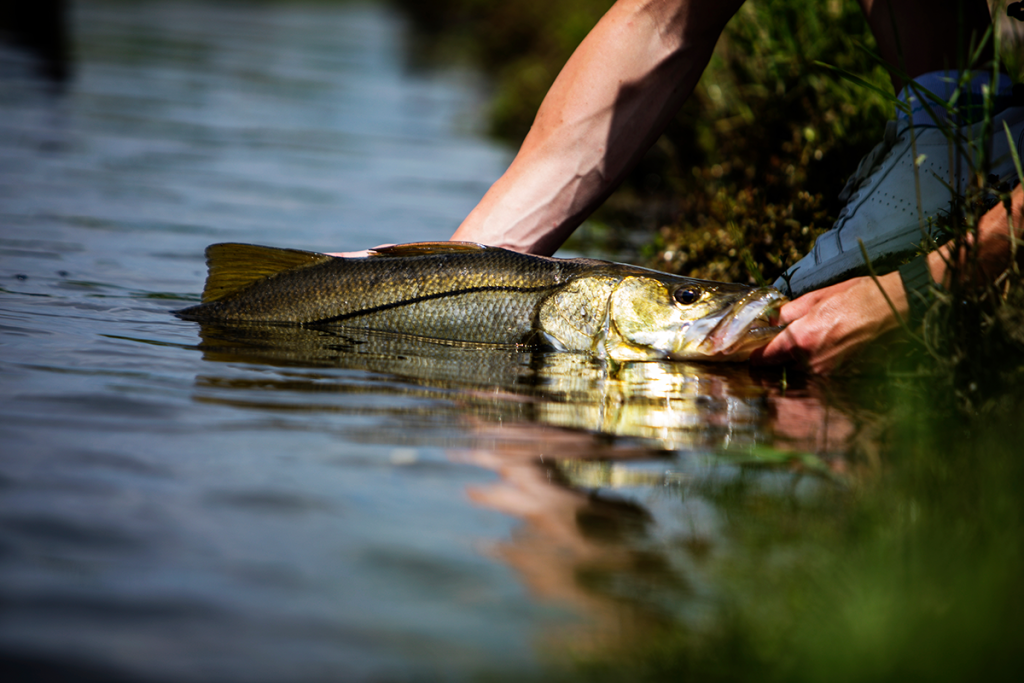
- Revive the Snook Before Release: Snook can fight to exhaustion, so it’s important to revive them before release. Hold the fish in the water by its tail and move it back and forth until it starts to kick. Then allow it to swim off on its own. This helps ensure the snook survives and is able to breed, maintaining a healthy fishery for future generations.
Remember, snook are a catch-and-release species during closed seasons, and even during open seasons, many anglers choose to release their catch to preserve the snook population. Always handle snook (and all fish) with care to increase their chances of survival after release.
Understanding Regulations Around Tampa Snook Fishing
Tampa snook fishing is a reel-y good time, but following the rules and regulations is important. We want to make sure we don’t breach the local regulations so that snook fishing remains an awesome experience for generations of anglers. We want to make sure these snook species stick around for future anglers to enjoy.
License to Gill
Before casting your line, ensure you have a valid saltwater fishing license. The Florida Fish and Wildlife Conservation Commission (FWC) has all the info you need on getting hooked up with a license. And if you’re specifically targeting snook, you’ll need an extra snook permit. Don’t worry, it’s not a snooker game, just a necessary step to keep things legal.
Reel ‘Em In Responsibly
When it comes to gear, keep it hook-and-line, folks. Spears, gigs, and other harmful methods are a no-go. We want to catch fish, not cause them harm. Let’s be good sports and give these snook a fighting chance.
Size Matters
Remember, there are size limits in place to protect the snook population. In Gulf Coast waters, including Monroe County and Everglades National Park, snook must be between 28 and 33 inches in total length. We’re all about catch and release, but let’s make sure these big fish have a chance to grow even bigger.
Follow these rules, and you’ll be on your way to a worry-free Tampa snook fishing adventure.
Contribute To Conservation Efforts For Sustainable Angling Practices
As passionate anglers, we are responsible for protecting the species we love. The IUCN Redlist provides valuable information about endangered and threatened fish populations. Some snook species are listed here due to overfishing and habitat loss.
The Gulf Coast is home to snook species that thrive in Tampa Bay’s shallow water hangouts. Let’s ensure their future by practicing sustainable angling:
- Catch-and-release: Help maintain healthy fish populations and let the big females keep breeding.
- Fish during appropriate seasons: Respect closed seasons for certain fish types, like common snooks, to protect their spawning periods.
- Avoid sensitive areas: Be mindful of nesting sites and shallow water habitats where juvenile fishes grow up.

Snook Focused Conservation Groups
Getting involved with local conservation groups can also make a difference in preserving our Gulf Coast ecosystems.
Here are a few you might find interesting:
- Florida Fish and Wildlife Conservation Commission (FWC): The FWC is a government agency committed to managing fish and wildlife resources for their long-term well-being and the benefit of people. Their efforts include various research, conservation, and management projects targeted at diverse species including snook.
- Bonefish & Tarpon Trust: While their name may suggest a focus on bonefish and tarpon, this group also works with snook. The Trust conducts studies and collaborates with other groups to understand and protect the coastal habitats where these species live.
- Florida Sea Grant: A university-based program that supports research, education and extension to conserve coastal resources and enhance economic opportunities for the people of Florida. They often partner with FWC and other organizations to help manage and conserve fish populations in Florida.
- The Snook & Gamefish Foundation: This organization is particularly focused on conserving gamefish like the snook. They gather angler data, support research, and promote education to ensure the future of Florida’s sport fishing.
- Coastal Conservation Association Florida (CCA Florida): CCA Florida is a non-profit organization dedicated to the conservation of Florida’s marine resources. They are involved in a wide variety of initiatives, including advocating for sustainable fishing regulations and engaging in habitat restoration projects.
- The Nature Conservancy – Florida: The Nature Conservancy is a global environmental nonprofit working to create a world where people and nature can thrive. In Florida, they focus on protecting aquatic habitats and educating the public about sustainable practices.
Remember, participation in conservation can take many forms: from supporting these organizations financially, volunteering, participating in citizen science projects, or even just practicing catch and release or following local fishing regulations. It’s all part of ensuring the health and abundance of Florida’s incredible fish populations.
Tampa Snook Fishing isn’t just about landing big catches; it’s about appreciating nature’s bounty while ensuring its sustainability. Let’s secure a bright future for all lovers of this amazing sport.
Chartering the Bay: Leveraging Local Expertise for Snook Fishing
There’s an old proverb us seasoned fishermen love to spin around our rods: “Give a man a fish and you feed him for a day; teach a man to fish and you feed him for a lifetime.” But I’ll tell you something else, a piece of wisdom that’s come from many a salty sunrise out on the water: “Show a man where the fish are, and he’ll never go hungry again.”
Now, if you’re here reading about snook fishing in Tampa Bay, I’m guessing you’re excited to get in on the action. But if you’re unsure about going solo, no worries. Tampa Bay has a wealth of local fishing guides, and I’m going to let you in on a little secret – they know where the fish are. Here’s the lowdown on three of the best: Bag’em Fishing Charters, Fishn’ Fl., and Rock Bottom Sport Fishing.
Bag’em Fishing Charters: Bag More Than Just Snook
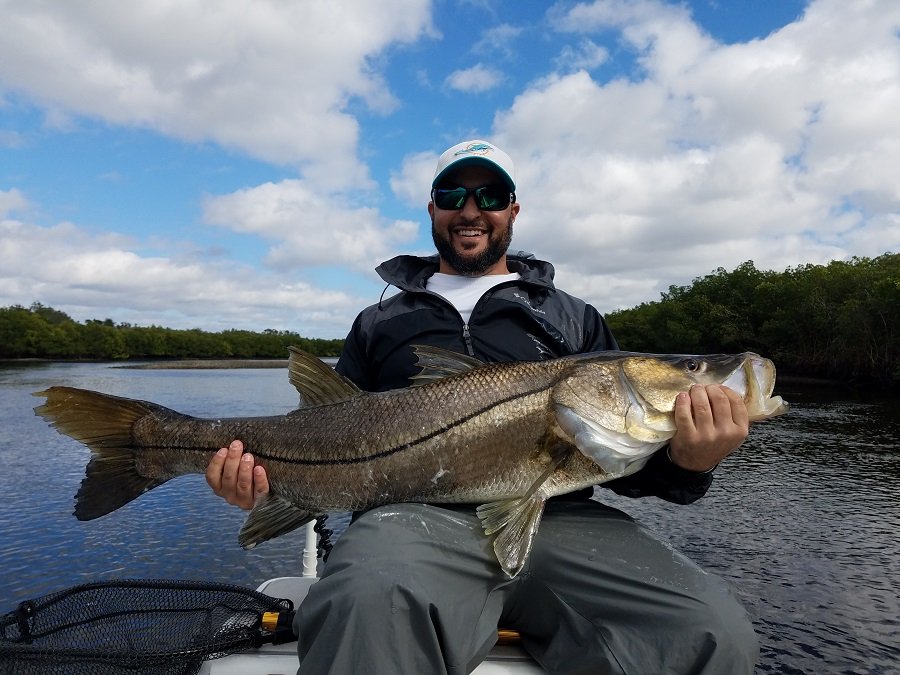
First up, we’ve got Bag’em Fishing Charters. Captain Bucky been navigating the Bay’s waters for years, honing his snook-finding senses. Whether you’re a greenhorn angler or an old sea dog, this experienced captains will customize your charter to match your skill level, ensuring you land more than just stories. What’s more, they use top-of-the-line gear to maximize your chances of bagging that prized snook. If you’re looking for more than just a guided fishing trip, you’ve found it.
Fishn’ Fl.: Immerse Yourself in Local Fishing Culture

Next, we’re casting a line towards Fishn’ Fl. This is more than just a charter; it’s a full-on fishing experience. With Captain Jason and crew, you’re not just a tourist, you’re part of the local fishing community, even if just for a day. These guys are Tampa Bay natives who grew up casting lines into these waters. They know every inlet, sandbar, and channel like the back of their hands. Plus, they’ve got an eye for snook behavior. If you want to immerse yourself in the local fishing culture, Fishn’ Fl. is your best bet.
Rock Bottom Sport Fishing: Learn the Art and Science of Fishing

Last but not least, let’s talk about Rock Bottom Sport Fishing. Their goal isn’t just to get you fishing – it’s to get you understanding fishing. Yes, they’ll guide you to the snook hotspots, but they’ll also impart invaluable knowledge about the species’ behaviors, ideal conditions, and effective techniques. You’re not just hiring a guide with Rock Bottom, you’re gaining a fishing mentor. If you’ve got the spirit of a lifelong learner, Rock Bottom Sport Fishing should be your first port of call.
So, there you have it. Bag’em Fishing Charters, Fishn’ Fl., and Rock Bottom Sport Fishing are three of Tampa Bay’s finest, each with their unique take on snook fishing. If you’re unsure about going it alone, hire a local guide. These folks are the cartographers of the Bay’s underwater world, and they’re ready to share their maps. After all, fishing is not just about casting and reeling. It’s about understanding the water, the fish, and the dance between them. And who better to teach you that dance than those who’ve been leading it for years?
FAQs in Relation to Tampa Snook Fishing
Can you catch snook in Tampa Bay?
Yes, Tampa Bay is a snook fisherman’s paradise.
Where is the best place to catch snook in Tampa Bay?
The north end and Pier 60 are snook hotspots in Tampa Bay.

What is the snook fishing capital of the world?
Stuart, Florida, proudly holds the title of the “Snook Fishing Capital of The World.”
What are the best snook lures in Tampa Bay?
Artificial baits like jigs and minnow-imitating plugs work wonders when targeting snooks.
Conclusion
Tampa Snook Fishing offers anglers a thrilling experience in the beautiful waters of Tampa Bay.
With four fascinating species of snook to target, including the common snook, you’ll have plenty of opportunities to reel in some big fish and show off your snook-catching skills.
Master the art of using artificial baits and learn the techniques specific to targeting these sergeant fish – it’s like a snook love language that will make them bite!
Remember to follow the regulations, get the necessary licenses, and use the right gear – we want to keep the snook population thriving for future generations of snook enthusiasts.


Comments